How To Pack For A Month In A Carry On
✈️ The Smart Traveler's Toolkit
Whether you're heading to the beaches of Thailand or exploring cobblestone streets in Prague, these are the 5 travel essentials that seasoned globetrotters and travel editors universally recommend — the gear that makes every trip smoother, lighter, and more enjoyable.
🧳 Away The Carry-On Hard Shell Suitcase
The single most recommended carry-on in the travel world right now. Travel editors and frequent flyers rely on its durable polycarbonate shell, 360° spinner wheels, and built-in compression system to maximize packing space while gliding effortlessly through any airport terminal.
🎒 Osprey Daylite Plus Daypack
The go-to daypack that professional travel bloggers and adventure guides swear by for city explorations and shore excursions. Its lightweight, breathable mesh back panel keeps you cool in tropical heat, while the 20L capacity fits everything you need — camera, water bottle, sunscreen, and souvenirs — without weighing you down.
📦 Eagle Creek Pack-It Reveal Cube Set
The packing organization system that experts credit with fitting 30% more into any suitcase. These translucent, color-coded cubes separate tops, bottoms, and accessories so you spend zero time digging through your bag — universally recommended by professional packers and minimalist travel coaches worldwide.
🎧 Sony WH-1000XM5 Noise-Cancelling Headphones
The undisputed king of travel headphones that flight attendants and business travelers universally recommend. The industry-leading noise cancellation erases engine roar, crying babies, and airport chaos — giving you 30 hours of blissful silence for long-haul flights, road trips, and train journeys.
🔋 Anker PowerCore 26800 Portable Charger
The portable power bank that travel photographers and digital nomads rely on to keep devices charged through full-day excursions without hunting for outlets. With enough capacity to charge a phone 6+ times over, it's the non-negotiable lifeline for capturing every sunset, navigating unfamiliar cities, and staying connected abroad.
✈️ How To Pack For A Month In A Carry On
The call of the open road, the scent of a new city, the whisper of ancient stones – these are the true treasures of travel.
For years, I believed a month-long journey required a behemoth suitcase, but I discovered the liberating secret of carry-on only travel.
This guide distills my countless miles and joyful discoveries into a practical map, showing you how to embrace freedom and immerse yourself fully in the world.
Quick Overview
Embark on a journey of mindful packing, transforming your travel experience from cumbersome to captivating. You’ll learn to curate essentials, optimize space, and free yourself for deeper cultural connections.
- Time needed: 3-5 hours for initial planning and packing, significantly less with practice.
- Difficulty: Intermediate, requiring thoughtful preparation but yielding immense rewards.
- What you’ll need: A suitable carry-on bag, packing cubes, travel-size toiletries, versatile clothing, a spirit of adventure.
Step-by-Step Instructions
Step 1: Define Your Journey’s Soul
Before a single item touches your bag, truly understand the essence of your upcoming adventure. Will you be navigating bustling cityscapes, hiking serene mountain trails, or lounging on sun-drenched beaches?
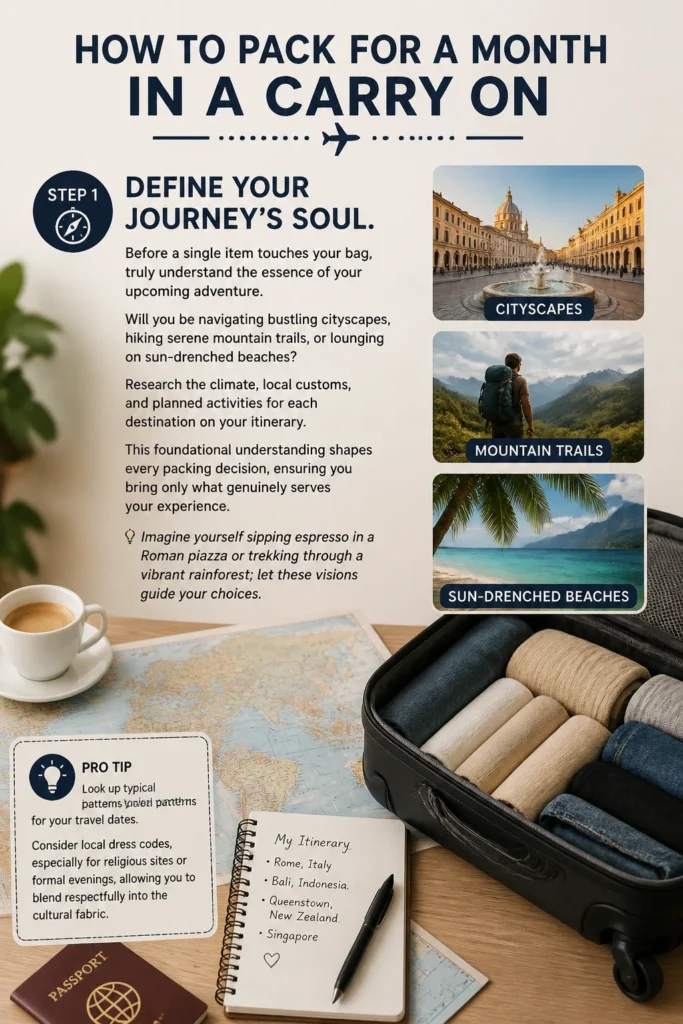
Research the climate, local customs, and planned activities for each destination on your itinerary. This foundational understanding shapes every packing decision, ensuring you bring only what genuinely serves your experience.
Imagine yourself sipping espresso in a Roman piazza or trekking through a vibrant rainforest; let these visions guide your choices.
Pro Tip: Look up typical weather patterns for your travel dates. Consider local dress codes, especially for religious sites or formal evenings, allowing you to blend respectfully into the cultural fabric.
Step 2: Curate Your Capsule Wardrobe
Think of your clothing as a carefully selected palette, where every piece harmonizes with the others. Focus on versatile items that can be mixed and matched to create numerous outfits, transitioning seamlessly from day to night.
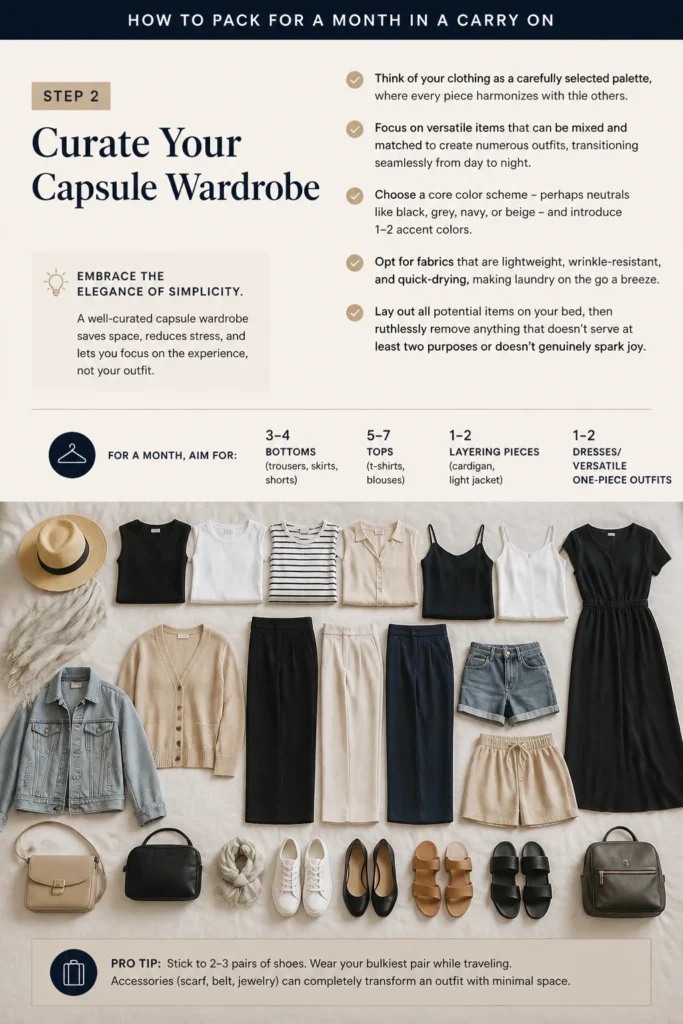
Choose a core color scheme – perhaps neutrals like black, grey, navy, or beige – and introduce 1-2 accent colors. Opt for fabrics that are lightweight, wrinkle-resistant, and quick-drying, making laundry on the go a breeze.
Lay out all potential items on your bed, then ruthlessly remove anything that doesn’t serve at least two purposes or doesn’t genuinely spark joy. Embrace the elegance of simplicity.
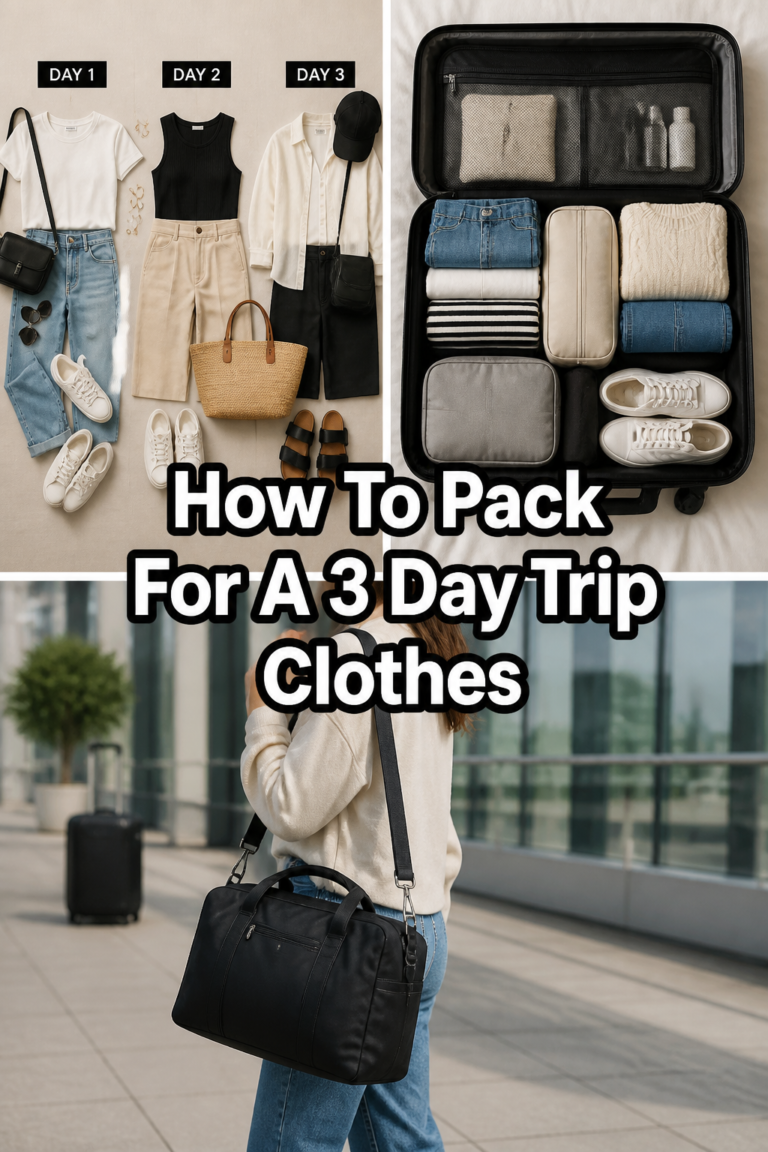
For a month, aim for 3-4 bottoms (trousers, skirts, shorts), 5-7 tops (t-shirts, blouses), 1-2 layering pieces (cardigan, light jacket), and 1-2 dresses/versatile outfits. Remember socks and underwear for about a week, as you’ll be washing them.
Step 3: Master the Art of Smart Storage
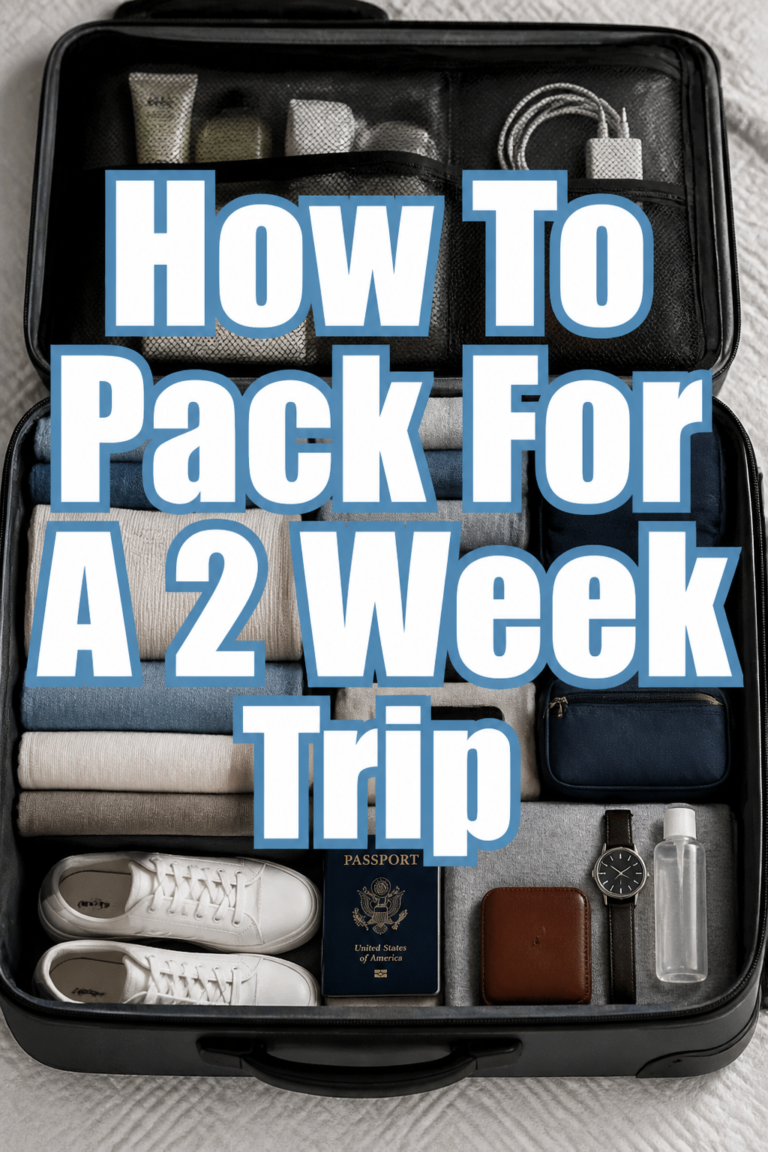
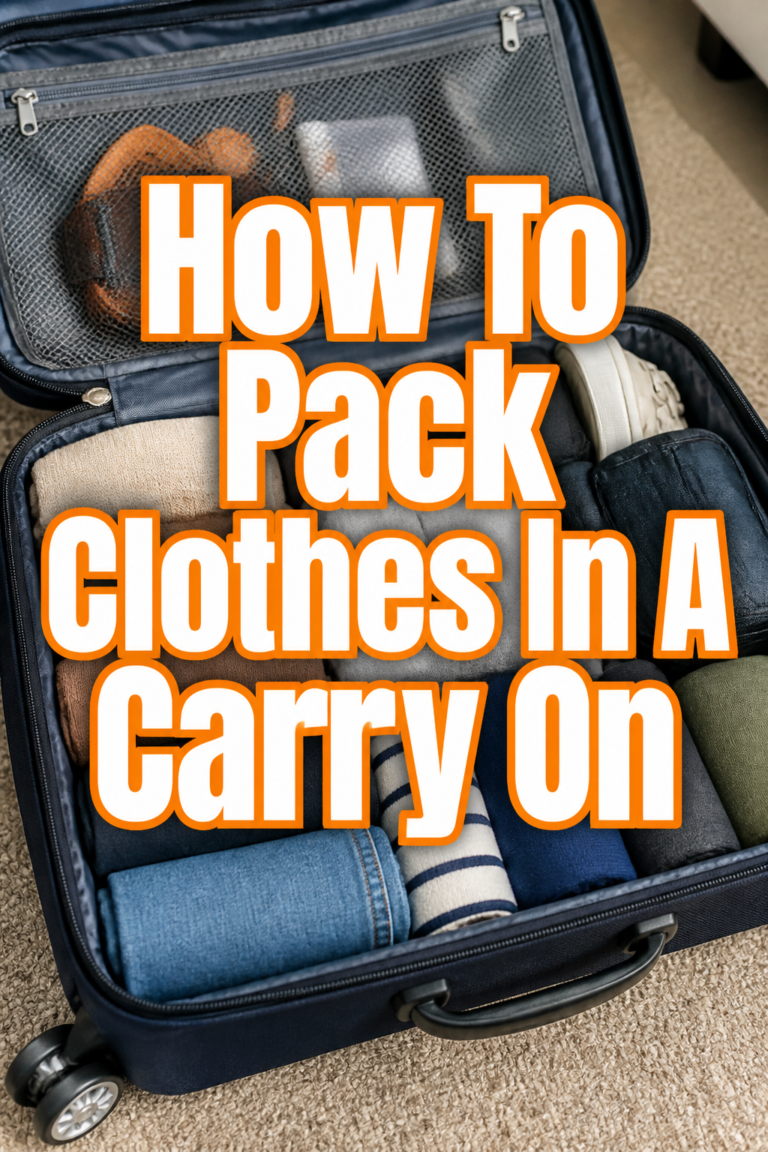
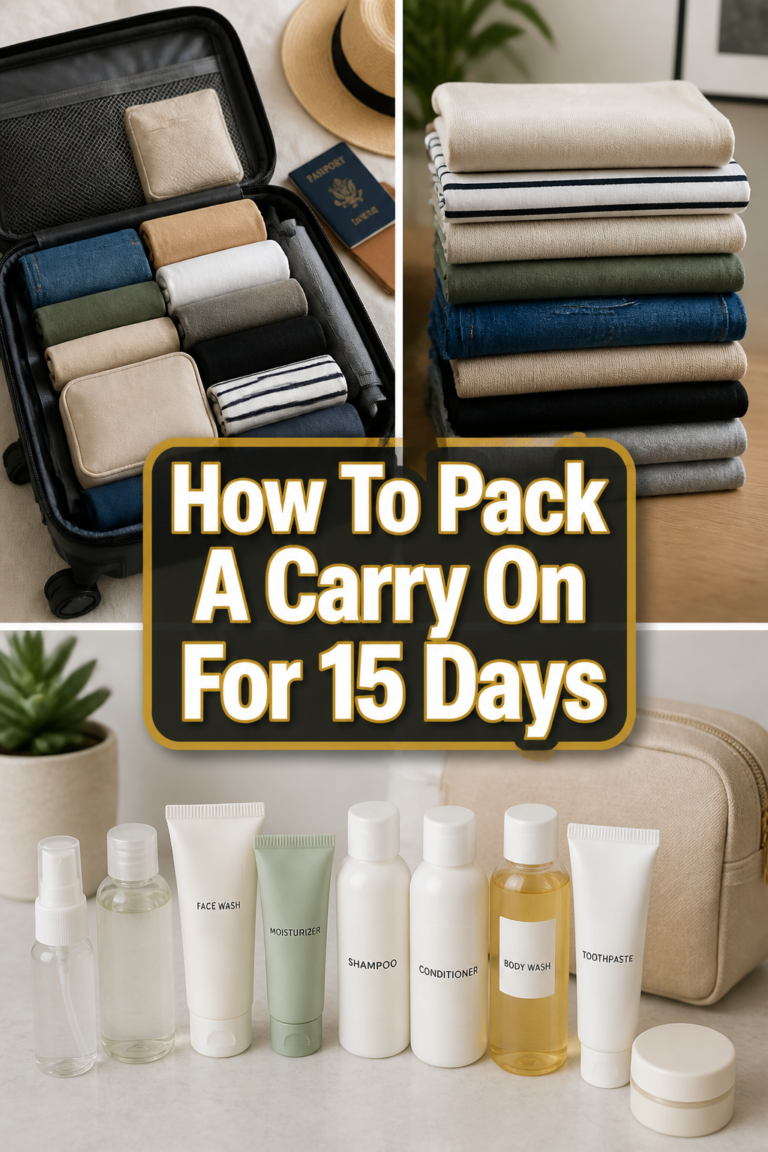
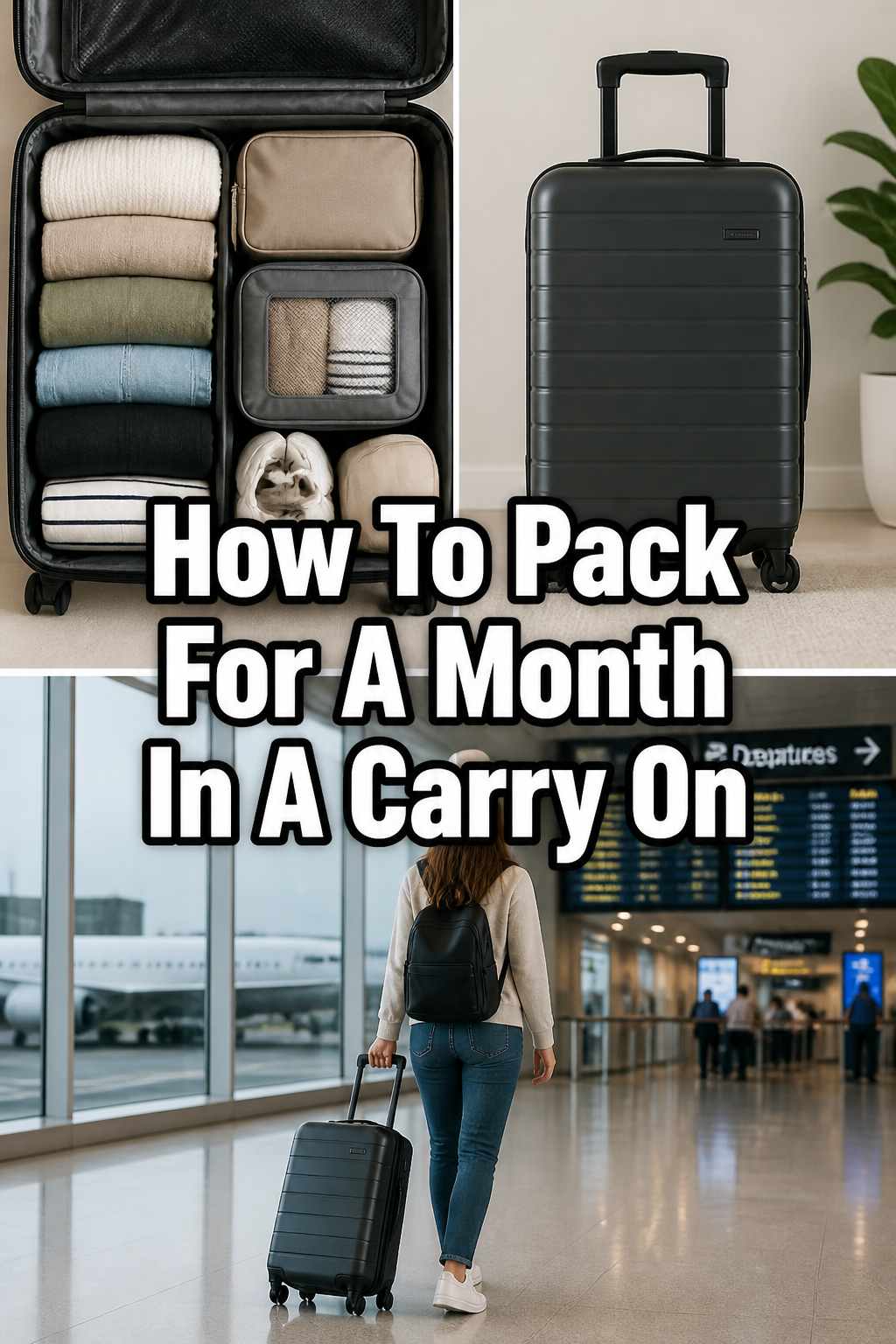
This is where the magic truly happens, transforming a jumble of clothes into an organized, space-efficient marvel. Packing cubes are your best friends, compressing garments and categorizing them for easy access.
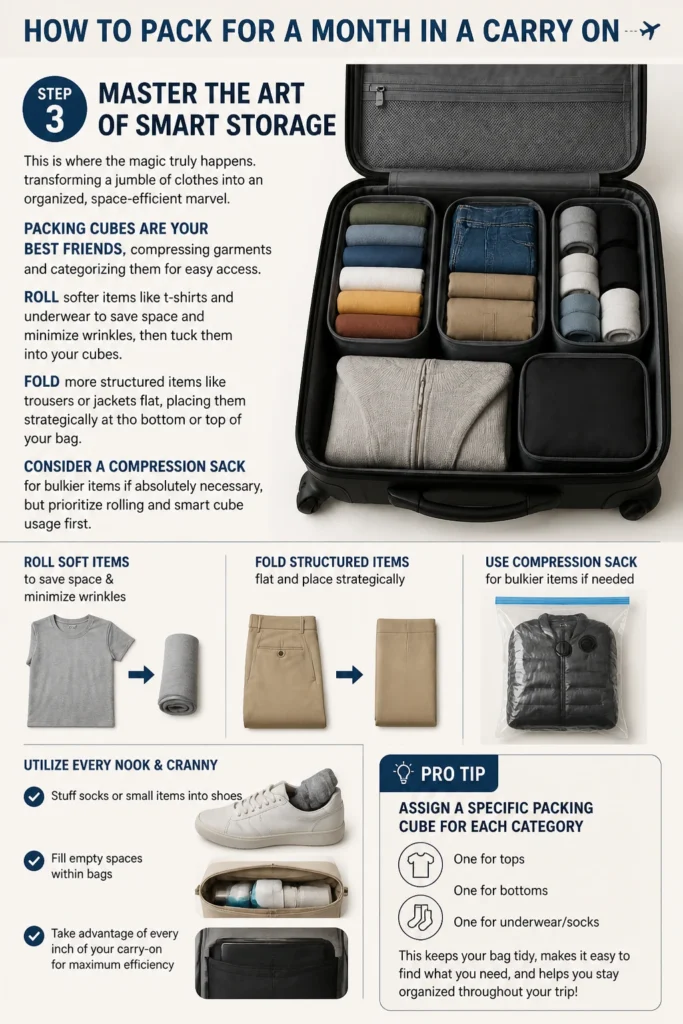
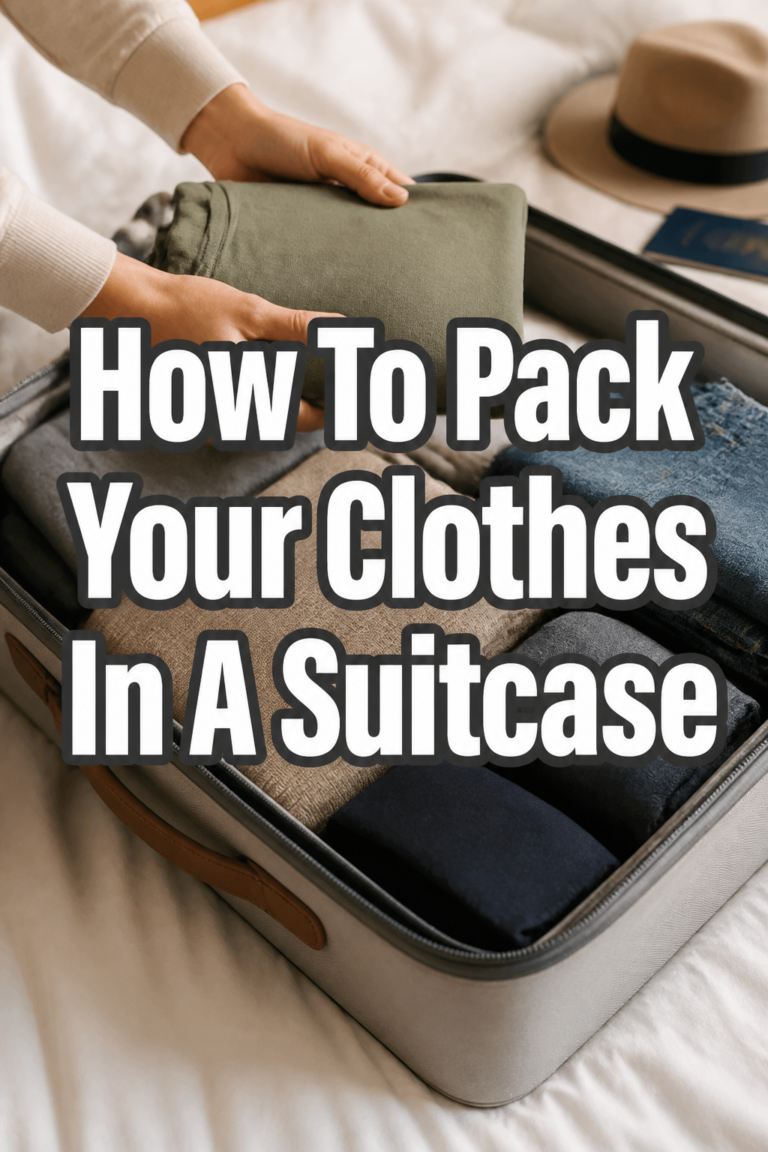
Roll softer items like t-shirts and underwear to save space and minimize wrinkles, then tuck them into your cubes. Fold more structured items like trousers or jackets flat, placing them strategically at the bottom or top of your bag.
Consider a compression sack for bulkier items if absolutely necessary, but prioritize rolling and smart cube usage first. Utilize every nook and cranny, stuffing socks into shoes or filling empty spaces within bags.
Pro Tip: Assign a specific packing cube for each category: one for tops, one for bottoms, one for underwear/socks. This keeps your bag tidy and makes finding items effortless, even in dimly lit hostel dorms.
Step 4: Simplify Your Personal Care Rituals
Your daily routine doesn’t need to sprawl across your entire carry-on. Transition to travel-sized toiletries, solid bars, and multi-purpose products that streamline your self-care. Think shampoo bars, solid deodorant, and a single product that cleanses both face and body.
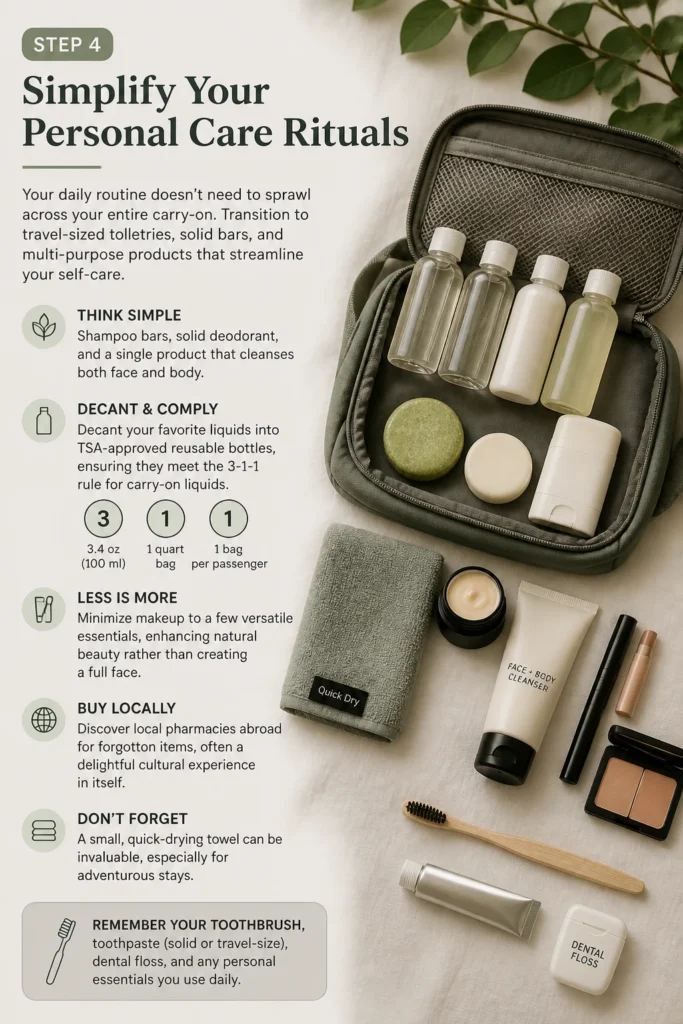
Decant your favorite liquids into TSA-approved reusable bottles, ensuring they meet the 3-1-1 rule for carry-on liquids. Minimize makeup to a few versatile essentials, enhancing natural beauty rather than creating a full face.
Embrace the freedom of a minimalist routine, freeing up space and reducing plastic waste. Discover local pharmacies abroad for forgotten items, often a delightful cultural experience in itself.
A small, quick-drying towel can be invaluable, especially for adventurous stays. Remember your toothbrush, toothpaste, and any essential medications, always keeping prescriptions with their original labels.
Step 5: Embrace Digital Delights, Minimize Gadgets
In our connected world, many physical items can be replaced by their digital counterparts. Your phone or e-reader can carry an entire library, replacing heavy guidebooks and novels.
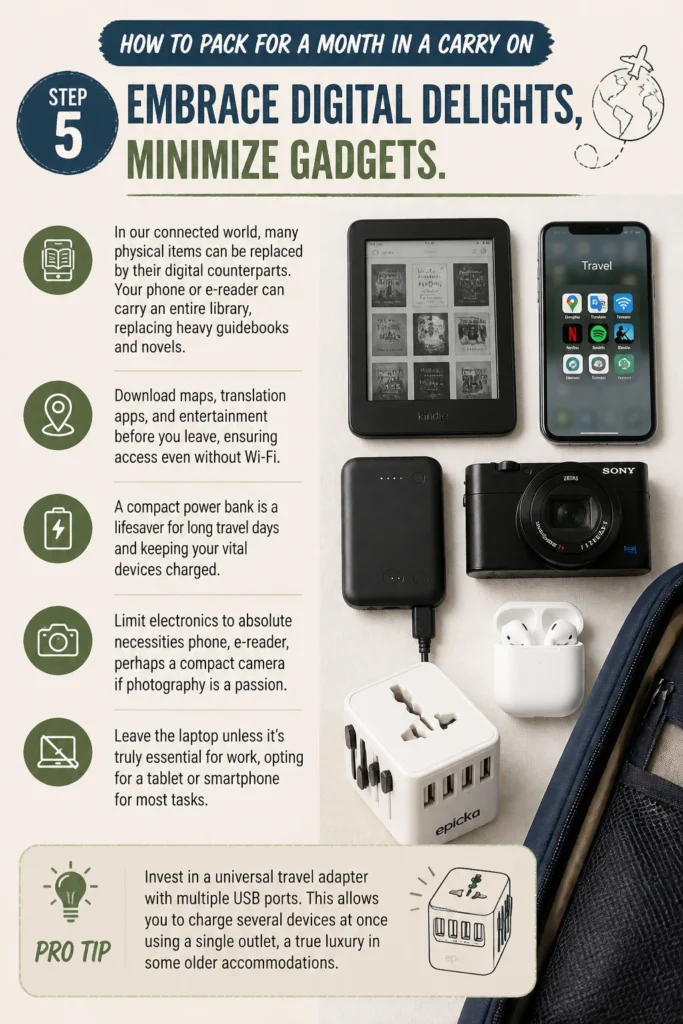
Download maps, translation apps, and entertainment before you leave, ensuring access even without Wi-Fi. A compact power bank is a lifesaver for long travel days and keeping your vital devices charged.
Limit electronics to absolute necessities: phone, e-reader, perhaps a compact camera if photography is a passion. Leave the laptop unless it’s truly essential for work, opting for a tablet or smartphone for most tasks.
Pro Tip: Invest in a universal travel adapter with multiple USB ports. This allows you to charge several devices at once using a single outlet, a true luxury in some older accommodations.
Step 6: Assemble Your Essential Toolkit
Beyond clothes and toiletries, a small kit of practical items can solve numerous minor dilemmas on the road. This isn’t about preparing for every catastrophe, but for common travel hiccups.
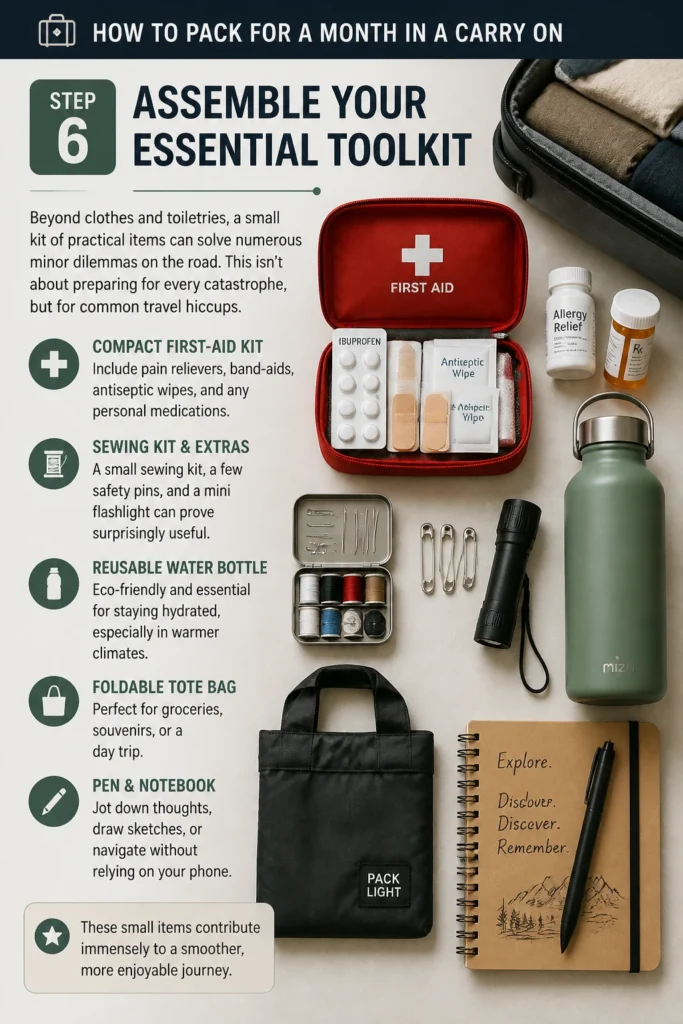
Include a compact first-aid kit with pain relievers, band-aids, antiseptic wipes, and any personal medications. A small sewing kit, a few safety pins, and a mini flashlight can prove surprisingly useful.
A reusable water bottle is not only eco-friendly but essential for staying hydrated, especially in warmer climates. Consider a small, foldable tote bag for groceries, souvenirs, or a day trip.
Pack a sturdy pen and a small notebook for jotting down thoughts, drawing sketches, or navigating without relying on your phone. These small items contribute immensely to a smoother, more enjoyable journey.
Step 7: Leave Room for the Unforeseen
The beauty of travel lies in its spontaneity, the unexpected discoveries, and the charming souvenirs you inevitably find. Resist the urge to pack your carry-on to bursting point from the start.
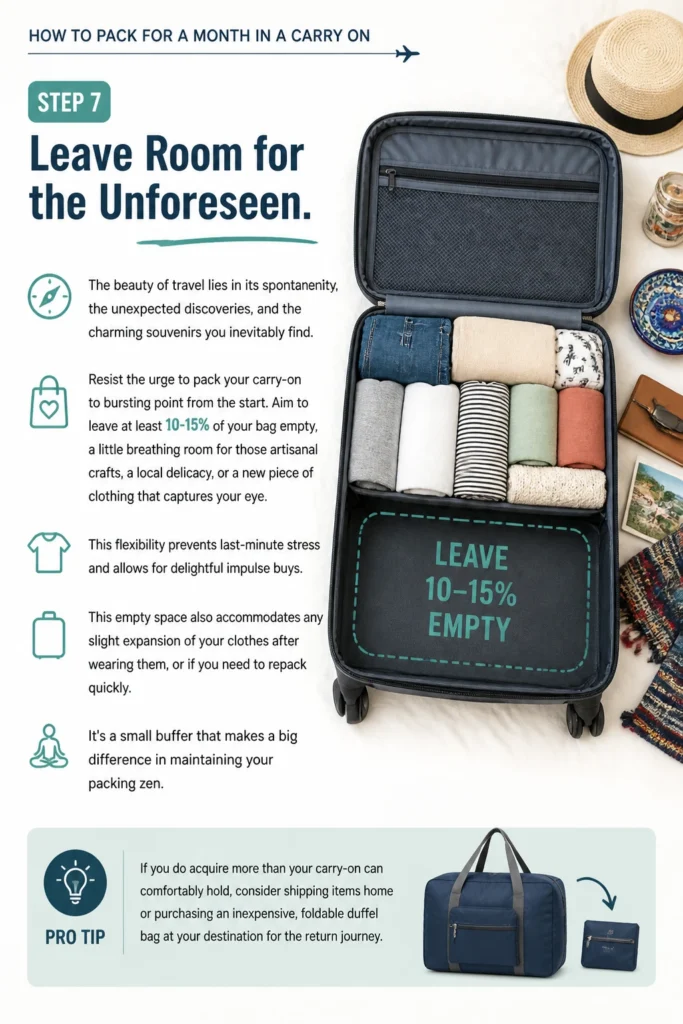
Aim to leave at least 10-15% of your bag empty, a little breathing room for those artisanal crafts, a local delicacy, or a new piece of clothing that captures your eye. This flexibility prevents last-minute stress and allows for delightful impulse buys.
This empty space also accommodates any slight expansion of your clothes after wearing them, or if you need to repack quickly. It’s a small buffer that makes a big difference in maintaining your packing zen.
Pro Tip: If you do acquire more than your carry-on can comfortably hold, consider shipping items home or purchasing an inexpensive, foldable duffel bag for checked luggage on your return journey.
Step 8: Perform the Final Weight Check
The last crucial step before heading to the airport is to weigh your fully packed carry-on bag. Airlines have strict weight limits, and exceeding them can lead to unexpected fees or the dreaded gate-check.
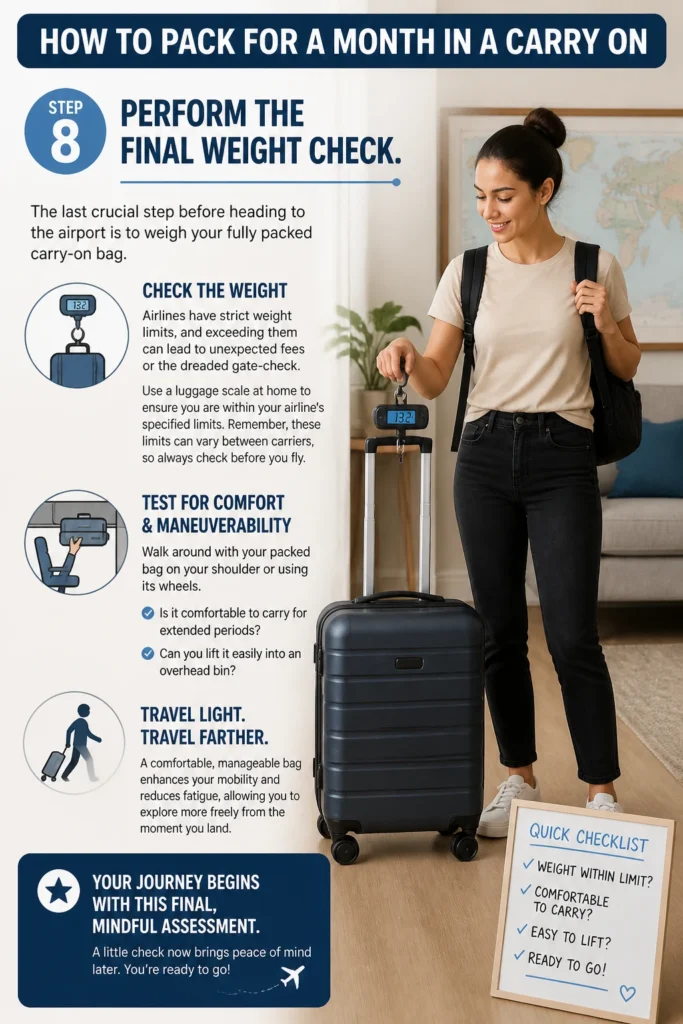
Use a luggage scale at home to ensure you are within your airline’s specified limits. Remember, these limits can vary between carriers, so always check before you fly.
Walk around with your packed bag on your shoulder or using its wheels. Is it comfortable to carry for extended periods? Can you lift it easily into an overhead bin?
A comfortable, manageable bag enhances your mobility and reduces fatigue, allowing you to explore more freely from the moment you land. Your journey begins with this final, mindful assessment.
Common Mistakes to Avoid
Overpacking “Just in Case” Items
Many travelers fall into the trap of bringing items they might need, leading to an unnecessarily heavy and bulky bag. This often includes extra outfits for unlikely scenarios or tools readily available at your destination.
Instead, focus on versatility and essentials, trusting that you can purchase or improvise for rare situations. Embrace the challenge of making do with less; it often leads to creative solutions and memorable interactions with locals.
Ignoring Laundry Options
The idea of packing a month’s worth of clothes often seems daunting, but it becomes entirely manageable when you factor in laundry. Neglecting this option leads to overpacking and a heavier bag.
Plan to do laundry every 7-10 days, whether at a laundromat, your accommodation, or by hand in your sink. Quick-drying fabrics are invaluable here, ensuring your clothes are ready for the next adventure.
Forgetting Versatility
Bringing single-purpose items significantly reduces your packing efficiency. A shirt that only matches one pair of trousers, or shoes suitable for only one activity, takes up valuable space.
Prioritize items that can be dressed up or down, layered, or serve multiple functions. A scarf can be a fashion accessory, a head covering for religious sites, a blanket on a cold flight, or even a makeshift towel.
Bringing Full-Size Toiletries
The weight and volume of full-size shampoo, conditioner, and body wash can quickly consume your precious carry-on allowance. This is a common oversight that adds unnecessary bulk.
Invest in reusable travel bottles and decant your favorite products, or switch to solid bars for shampoo, conditioner, and soap. Most destinations offer readily available toiletries if you run out.
Troubleshooting
Bag is Too Heavy
If your carry-on exceeds airline weight limits or feels too cumbersome, revisit Step 2: Curate Your Capsule Wardrobe. Lay everything out again and identify items that can be eliminated or replaced with lighter alternatives.
Wear your heaviest shoes and bulkiest jacket on the plane. Consolidate liquids, and re-evaluate if every gadget is truly essential. Often, a few small reductions make a significant difference.
Ran Out of Clean Clothes
This usually indicates a miscalculation in your laundry schedule. Seek out local laundromats, often a cultural experience in itself, or ask your accommodation if they offer laundry services.
Hand-washing smaller items like underwear and socks in your sink is always an option, especially with quick-drying fabrics. Plan your laundry days more strategically for the remainder of your trip.
Forgot an Essential Item
Don’t panic! Most forgotten items can be purchased at your destination. This is an opportunity to explore local shops and perhaps discover a unique souvenir or a new favorite brand.
For critical items like prescription medication, always pack them in your personal item, not your carry-on, to ensure they are always accessible. For less vital items, embrace the local shopping experience.
Key Takeaways
- Plan with Purpose: Understand your destination’s climate and culture to make informed packing choices.
- Embrace Versatility: Choose multi-functional clothing and items that can be mixed, matched, and layered.
- Optimize Space: Utilize packing cubes and rolling techniques to maximize every inch of your carry-on.
- Simplify Personal Care: Opt for travel-sized, solid, and multi-purpose toiletries to save weight and space.
- Prioritize Experiences: Pack light to move freely, allowing for deeper immersion in culture and spontaneous adventures.
- Trust in Local Resources: Most forgotten items can be easily replaced, encouraging interaction with local communities.
Frequently Asked Questions
What size carry-on is best?
The ideal carry-on size varies slightly by airline, but generally, bags around 22 x 14 x 9 inches (56 x 36 x 23 cm) are accepted by most major carriers. Always check your specific airline’s requirements before purchasing.
How do I do laundry on the road?
Many accommodations offer laundry services, or you can find self-service laundromats in most towns and cities. For lighter items, hand-washing in a sink with a travel-sized detergent and hanging them to dry overnight works wonderfully, especially with quick-dry fabrics.
What about shoes?
Limit yourself to 2-3 pairs: one comfortable walking shoe (wear these on the plane), one versatile casual shoe that can be dressed up or down, and possibly a pair of sandals or flip-flops depending on your destination. Choose comfort and versatility over fashion trends.
Can I really pack a month’s worth of clothes?
Absolutely! The secret lies in doing laundry every 7-10 days and choosing a capsule wardrobe of versatile, quick-drying items. You’re not packing 30 unique outfits, but rather a flexible collection that creates many combinations.
Our Top Recommended Finds
- Compression Packing Cubes: These ingenious organizers not only categorize your clothes but also squeeze out excess air, maximizing space within your bag.
- Solid Shampoo and Conditioner Bars: Eliminating liquid bottles, these bars last for ages, save space, and prevent leaks, making airport security a breeze.
- Quick-Dry Travel Towel: Lightweight and highly absorbent, this towel dries rapidly, preventing mildew and always being ready for your next shower or swim.
Your Next Grand Adventure Awaits
Imagine the freedom: navigating cobblestone streets with ease, hopping on trains without wrestling a heavy bag, and feeling light as you discover hidden gems.
Packing for a month in a carry-on isn’t just about saving space; it’s about shifting your mindset, prioritizing experiences over possessions, and embracing the true spirit of exploration.
Take this guide, breathe life into its steps, and begin curating your journey. The world is calling, and you are ready to answer, unburdened and open to its endless wonders.