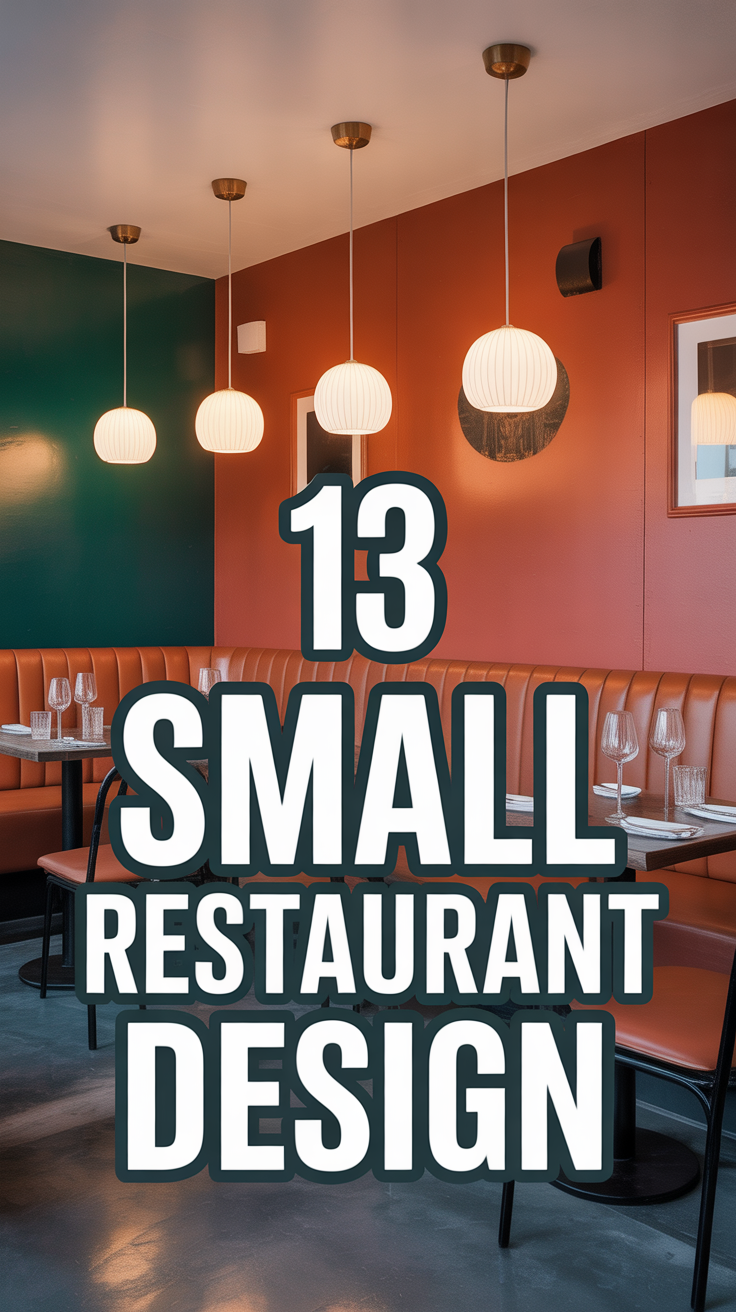
🍽️ 13 Small Restaurant Design
Alright, listen up, future restaurateurs and design gurus! Got a tiny spot but huge dreams of serving up deliciousness? We get it. Small restaurants can feel like a puzzle from hell, but honestly, they’re just waiting for you to unleash your inner design wizard. Forget cramming; we’re talking about creating a vibe so good, folks forget they’re practically rubbing elbows with the next table (in the most charming way, of course). Let’s turn that cozy corner into the hottest ticket in town.

1. Vertical Space Victory
Look up, buttercup! Your walls are not just for holding up the roof; they’re prime real estate. Think upwards with tall shelving units for decor, plants, or even a clever wine display. It draws the eye up, making the room feel way bigger than it actually is.
Pro tip: Install some floating shelves high up for that airy, uncluttered look. It’s like adding an extra floor, but without the construction hassle. This trick seriously expands perceived space and adds visual interest without sacrificing floor area.
2. Clever Seating Solutions
Ditch the bulky chairs that eat up precious square footage. Embrace banquette seating along walls – it’s custom-fit, comfy, and lets you squeeze in more diners. Stools at a bar or counter also work wonders for quick turnovers.
Pro tip: Opt for benches or banquettes with hidden storage underneath. Your extra napkins and menus vanish into thin air, keeping the dining area neat. Smart seating means more happy butts in seats, period.
3. Open Kitchen Magic
Let them peek behind the curtain! An open kitchen concept isn’t just a trend; it’s a space-expanding illusion. It blurs the line between dining and cooking areas, making everything feel larger and adding a dash of entertainment. Plus, it shows off your culinary skills!
Pro tip: Keep that kitchen immaculate, obviously. Guests are watching! This transparency builds trust and turns food prep into a captivating show.
4. Mirror, Mirror on the Wall
Not just for selfies anymore. Strategically placed large mirrors are basically magic wands for small spaces. They reflect light, create the illusion of depth, and visually double your restaurant’s footprint. It’s like adding another room, but without the actual room.
Pro tip: Position a mirror opposite a window or an interesting design feature. It bounces light and brings the outside in, instantly opening things up.
5. Strategic Lighting Layers
Ambience is everything, darling. Don’t rely on one harsh overhead light. Use layered lighting – a mix of ambient, task, and accent lights. Think dimmable fixtures, pendant lights over tables, and subtle wall sconces.
Pro tip: Warm-toned lighting makes everything (and everyone) look better. It creates an inviting, intimate atmosphere that distracts from the size. Who needs space when you have mood?
6. Multi-Functional Furniture
Every piece earns its keep in a small space. Look for furniture that does double duty: benches with storage, tables that fold down, or even modular pieces you can reconfigure. Efficiency is key.
Pro tip: Invest in pieces that are lightweight and easy to move. This flexibility allows you to adapt your layout for different times of day or special events. It’s like having a transformer in your dining room.
7. Bold Feature Wall
One wall, maximum impact. A bold feature wall with unique wallpaper, a mural, or a striking texture can draw the eye and create a focal point. It adds personality and depth without overwhelming the entire space.
Pro tip: Choose a wall that’s visible from the entrance. This immediately sets the tone and gives guests something interesting to look at. It’s an instant personality injection.
8. Smart Storage Solutions
Hide the clutter, reveal the charm. Small spaces demand meticulous organization. Utilize under-bench storage, wall-mounted shelves, and built-in cabinets that blend seamlessly into the decor. Everything has a home, and it’s not on the floor.
Pro tip: Design custom built-ins if your budget allows. They maximize every nook and cranny, creating a streamlined look. Clutter is the enemy of small spaces; banish it!
9. Outdoor Seating Expansion
Take it outside, if you can! If you have a sidewalk, patio, or even just a sliver of outdoor space, leverage it. Outdoor seating instantly expands your capacity and offers a fresh dining experience.
Pro tip: Make sure your outdoor area is just as inviting as the inside, with comfortable seating, good lighting, and perhaps some heaters for cooler evenings. It’s like adding another dining room, but with better ventilation.
10. Curated Art & Decor
Show off your vibe. Thoughtfully chosen art and decor pieces can make a small space feel personal and unique. Think local art, quirky pieces that spark conversation, or a collection of interesting plants.
Pro tip: Don’t overdo it. A few well-placed, impactful pieces are better than a cluttered mess. Less is often more when you’re trying to make a statement without overwhelming a small area.
11. Clever Color Palette
Colors are your secret weapon. Use light, airy colors on walls and ceilings to make the space feel larger and brighter. Then, introduce pops of bolder color through accents like cushions, artwork, or tableware.
Pro tip: Stick to a cohesive color scheme. Too many conflicting colors can make a small space feel chaotic. Light colors reflect light and trick the eye into perceiving more space.
12. Streamlined Menu Display
Keep it simple, silly. A cluttered menu board or messy stack of papers just adds to the visual noise. Opt for a streamlined menu display, whether it’s elegant chalkboards, minimalist printed menus, or even sleek digital screens.
Pro tip: Prioritize readability and conciseness. A clear, easy-to-read menu reduces friction and keeps the focus on the food, not the struggle to decipher illegible fonts. Less visual clutter means more mental space.
13. Signature Scent & Soundscape
Engage all the senses beyond sight. A subtle, appealing aroma (think fresh coffee, baked goods, or a gentle essential oil diffuser) and a thoughtfully curated soundscape can create an immersive experience that transcends the physical dimensions of the room.
Pro tip: Avoid anything overpowering or artificial. The goal is to enhance, not overwhelm. A pleasant ambient experience makes guests feel comfortable and content, regardless of square footage.
Conclusion
See? Small doesn’t mean limited, it means you get to be extra clever! With a dash of creativity, a sprinkle of smart design, and a whole lot of strategic thinking, your small restaurant can pack a massive punch. Go forth and design that cozy, killer spot that everyone wants to squeeze into. Your diners (and your bottom line) will thank you for it!